The Balinese New Year & Sacred Silence
Nyepi Festival Bali: The Day of Total Silence & Spiritual Rebirth
For 24 hours every March, Bali comes to an absolute standstill — no flights, no vehicles, no lights, and no sound — as the island turns inward in cosmic stillness.
Across Bali • Balinese Saka New Year
Nyepi is the only day on earth where an entire modern island shuts down completely. In the absolute darkness and stillness, the Milky Way blazes overhead with an intensity unseen anywhere else in Southeast Asia.
What Is Nyepi?
Nyepi marks the first day of the Balinese Saka Lunar Calendar, occurring in March on the day following the dark new moon (Tilem Kesanga). Unlike festive New Year celebrations elsewhere in the world marked by fireworks and revelry, the Balinese welcome their new year with complete introspection, fasting, and profound silence.
For a full 24 hours from 6:00 AM on Nyepi morning until 6:00 AM the following day, the entire island shuts down. The international airport closes, all vehicular traffic is suspended, beaches and streets are completely empty, and no artificial lights or open flames are permitted.
The Four Sacred Prohibitions (Catur Brata Penyepian)
During the 24 hours of Nyepi, four cardinal rules of self-restraint are strictly observed across Bali:
- Amati Geni: No fire or artificial light (homes remain completely dark; curtains drawn).
- Amati Karya: No physical labor, work, or commercial activity.
- Amati Lelungan: No travel or movement outside one's residence.
- Amati Lelanguan: No entertainment, loud music, or sensory indulgence.

The Eve of Nyepi: The Ogoh-Ogoh Carnival
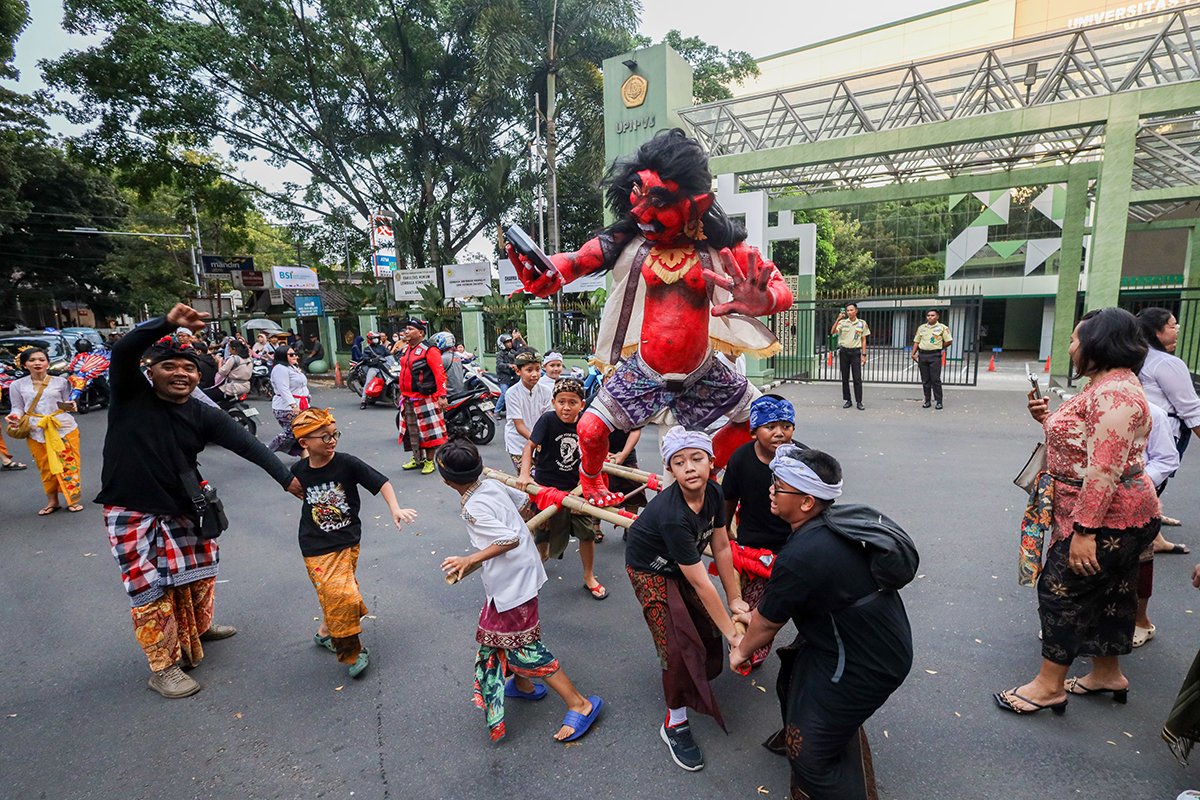
In striking contrast to the silent day that follows, the eve of Nyepi is an explosion of sound, fire, and drama known as Ngrupuk. Balinese youth in every village spend months building giant mythological demon sculptures called Ogoh-Ogoh, representing negative cosmic energies.
At dusk, these monstrous effigies are paraded through the streets accompanied by torches, clashing cymbals, and thunderous gamelan music to lure and confuse malevolent spirits before the sculptures are ritually burned, cleansing the island for the silent New Year.
Frequently Asked Questions
Can tourists leave their hotel or resort on Nyepi Day?
No. By Balinese law, everyone on the island (including visitors and tourists) must remain inside their hotel grounds or villa for the full 24 hours. Resorts operate with dimmed interior lights and continue providing meals and hospitality quietly inside.
Does Ngurah Rai International Airport close during Nyepi?
Yes. Bali's international airport (DPS) completely closes to all commercial flights for 24 hours during Nyepi, with exceptions made only for emergency medical evacuations.
Why is Nyepi such a special time to visit Bali?
Nyepi offers an extraordinary opportunity to experience zero traffic, zero pollution, absolute quiet, and the world's most spectacular stargazing as zero ambient light illuminates the entire galaxy overhead.