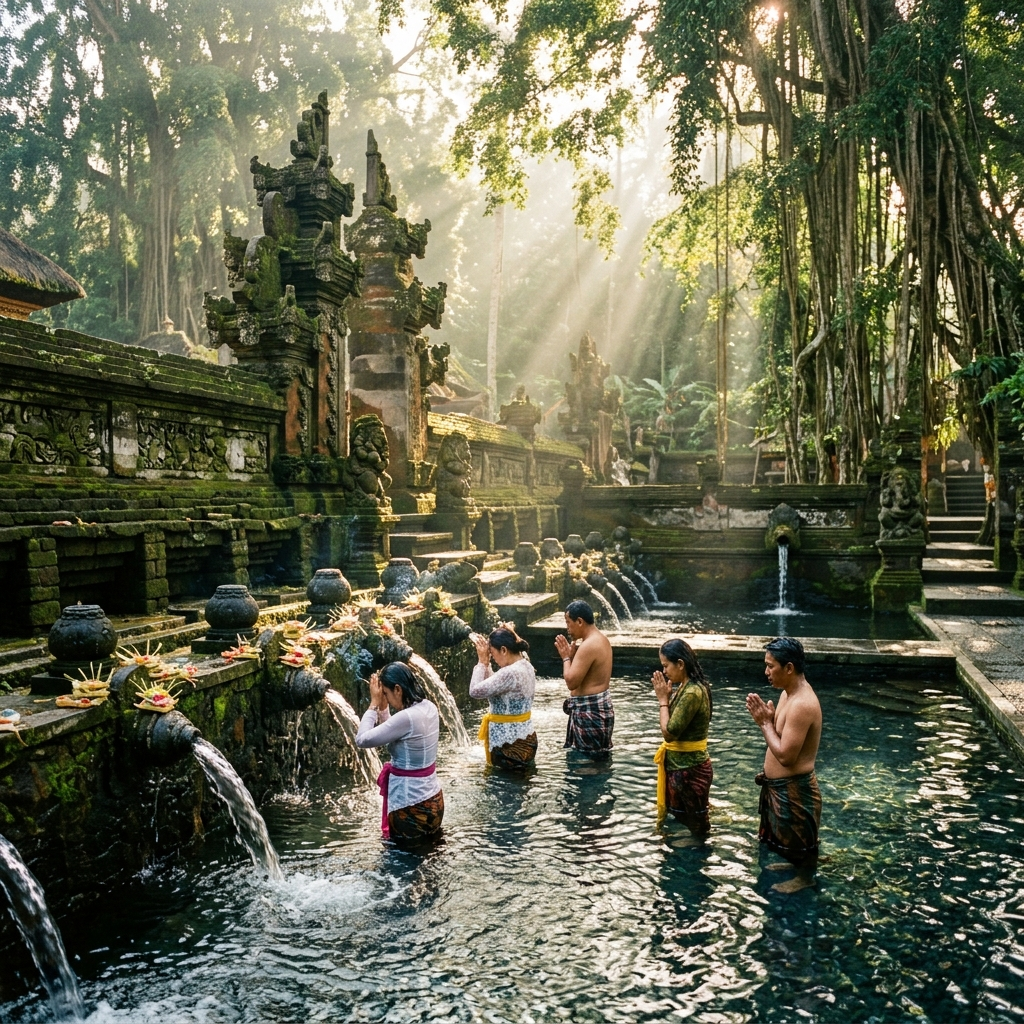
Sacred Balinese Festivals & Cultural Heritage
Galungan Festival Bali: The Triumph of Dharma & Ancestral Blessings
Every 210 days, Bali transforms into an open-air corridor of towering bamboo penjor poles as families welcome ancestral spirits home.
Across Bali • Cultural & Spiritual Festival
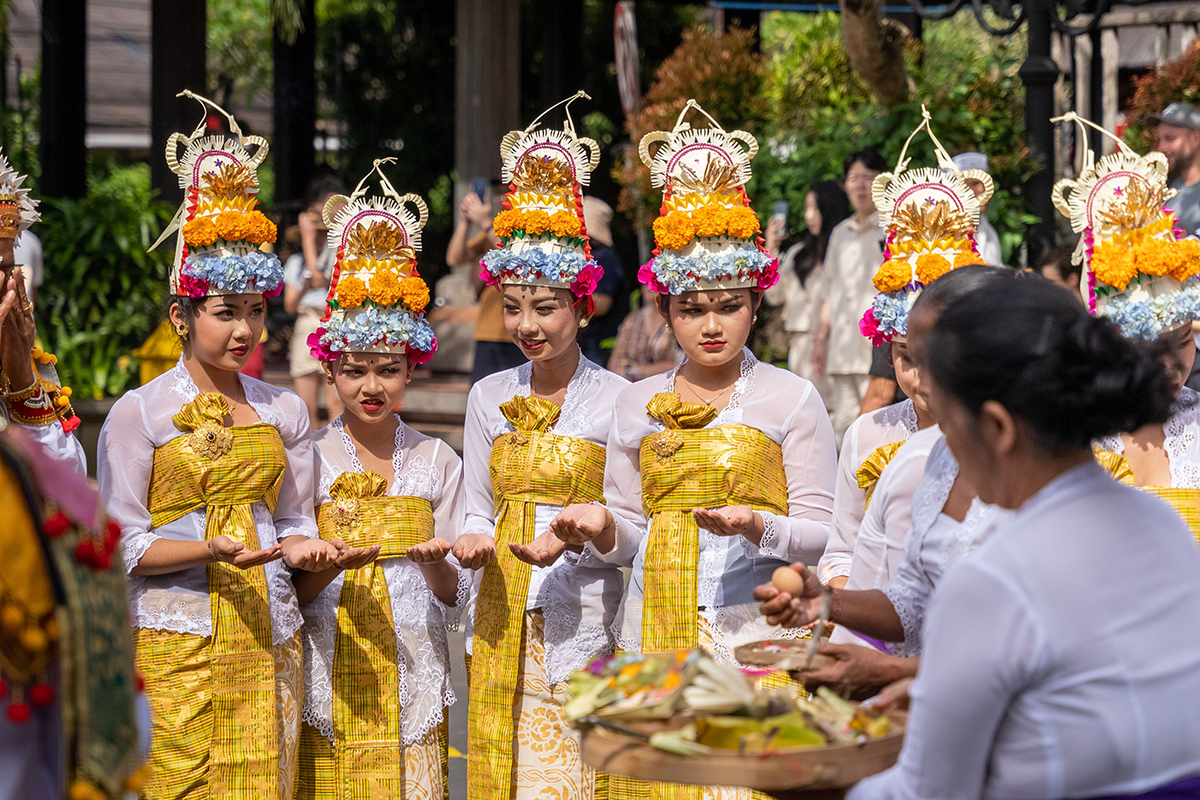
Galungan is not merely a date on the 210-day Pawukon calendar — it is the soul of Bali made visible, where every village street becomes an intricate cathedral of curved bamboo, coconut leaf art, and temple devotion.
The Cosmic Meaning of Galungan
Galungan is one of the most important and visually stunning religious celebrations in Balinese Hinduism. Lasting ten full days and culminating in Kuningan, it marks the cosmic triumph of Dharma (truth, righteousness, and order) over Adharma (chaos, greed, and malevolence).
According to ancient Balinese mythology, it commemorates the legendary victory of the benevolent god Indra over the tyrannical demon-king Mayadenawa, who had forbidden temple worship. During Galungan, ancestral spirits are believed to descend from heaven to visit their family homes on earth.
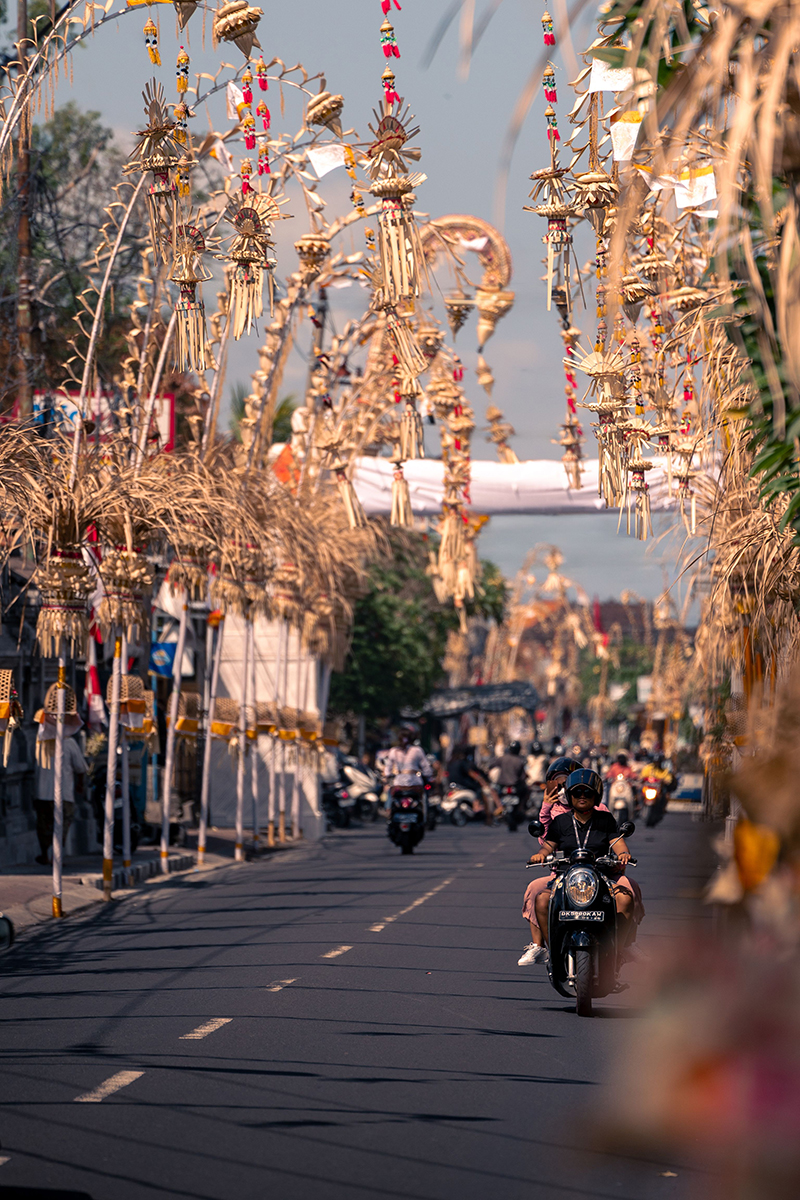
The Penjor: Curved Bamboo Art
In the days leading up to Galungan, every Balinese household erects a penjor — an eight-meter curved bamboo pole sumptuously adorned with woven palm leaves, yellow flowers, unhusked rice stalks, and seasonal fruits. Each element serves as an offering of gratitude to the supreme deity Sang Hyang Widhi Wasa and the sacred volcanic peak Mount Agung for the earth's bounty.
The Ten-Day Festive Journey
The festival unfolds through distinct ceremonial days:
- Penyekeban (3 days before): Bananas are stored in warm pots to ripen for temple offerings.
- Penyajan (2 days before): Women craft intricate traditional rice cakes (jaja) while homes are cleansed.
- Penampahan (Eve of Galungan): The day of preparation, penjor raising, and culinary feasts featuring traditional lawar.
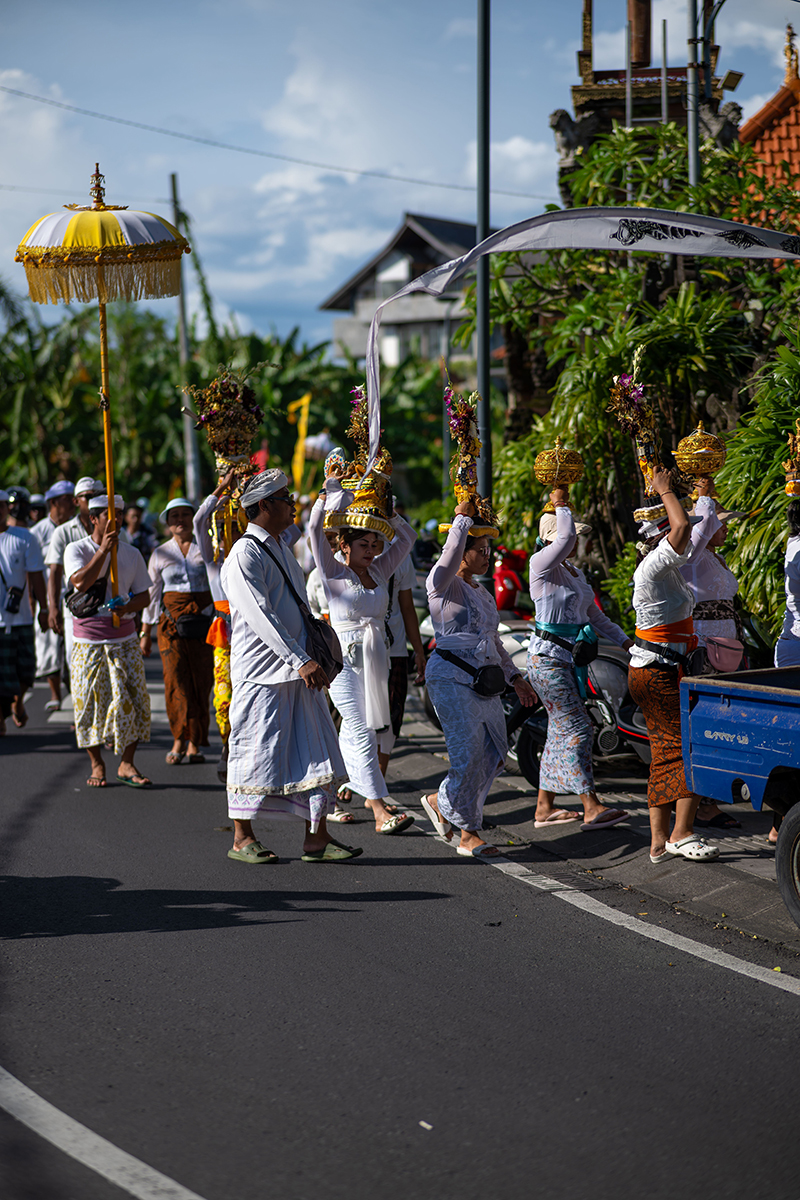
- Galungan Day: The pinnacle day of family prayer, ancestral welcomes, and vibrant temple processions.
- Manis Galungan: A day for visiting relatives, reuniting with friends, and community celebrations.
- Kuningan (Day 10): The grand finale when ancestral spirits return to heaven with yellow rice offerings and farewell blessings.
Frequently Asked Questions
Can tourists participate in or observe Galungan ceremonies?
Yes, visitors are warmly welcomed to witness the celebrations. Proper temple attire (a traditional sarong and sash) is required when entering temple grounds, along with respectful, quiet conduct during prayer rituals.
How often does Galungan take place?
Galungan occurs every 210 days based on the Balinese Pawukon lunar-solar calendar, meaning it typically happens twice in a Gregorian calendar year.
What are the penjor poles made of?
Penjors are made from tall curved bamboo stems wrapped in yellow coconut leaves (janur), dried rice sheaves, tropical fruits, sugarcane, and a small woven shrine (sanggah cucuk) at the base.